Knowledge and material
How split shingles age
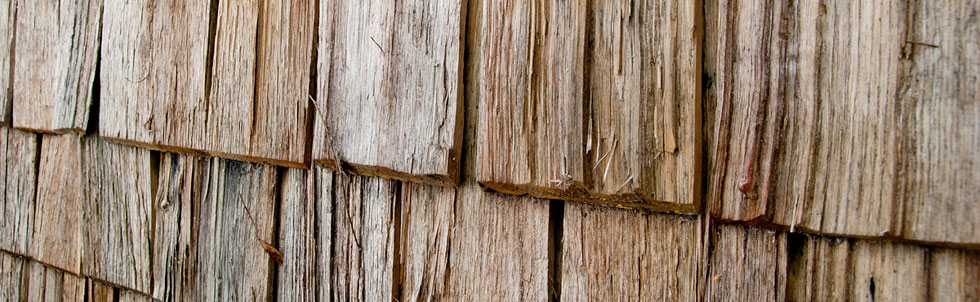
A shingle does not age like paint. It does not peel in sheets or pretend to be new. Over time its surface greys, and the rhythm of the courses becomes more visible.
Three things to watch
- Colour — from fresh timber to silver grey.
- Water — the surface still sheds it according to the geometry of the shingle.
- Detail — edges and shadow reveal the way it was split.
That is why shingles suit architecture meant to gain character rather than demand constant refreshing.
Grey is a record of conditions
A colour change is the wood surface responding to light, water and air. Colour should not be confused with a technical assessment. A beautiful silver surface tells you little about the details, and a darker patch does not automatically mean failure.
What matters is whether water can run away and whether the elements can dry. Leaves, blocked valleys, failed flashings and areas without airflow deserve attention regardless of colour.
What to look at during an inspection
- Eaves, ridge, valleys and areas around roof penetrations.
- Shingle edges, where water and ice may remain longest.
- Fixings and pieces that have loosened after a season.
- Shaded areas where timber stays damp for longer.
- Vegetation and deposits that restrict drainage.
Maintenance does not have to mean restoring a fresh colour. Often the wiser response is a calm inspection, removing the cause of wetting and replacing individual elements rather than aggressively cleaning the whole surface.
Natural ageing does not replace inspections
Shingles can age beautifully, but they remain part of a roof that needs observation. For repairs and coatings, follow the material, local conditions and the installer’s advice—not only the desire to change the colour.
What colour cannot tell you
Colour cannot tell you whether water is trapped below a flashing, whether ventilation is working or whether a fixing is still secure. Surface observation should therefore be combined with looking at the places where the roof changes direction and receives the most water.
There is no universal date at which a shingle roof needs replacement. An inspection should lead to a specific decision: leave it alone, repair a detail, replace a few shingles or ask the installer for a closer assessment.
Maintenance without fighting the material
Shingles do not need to be glossy, even or one colour to belong to a building. Cleaning makes sense when it solves a particular problem, not when it is an attempt to stop natural surface change.
If you are considering a coating, check that it suits the wood, the installation and local requirements. An unsuitable product can restrict drying or create the appearance of protection without solving the underlying issue.